Cooking-Line Exteriors
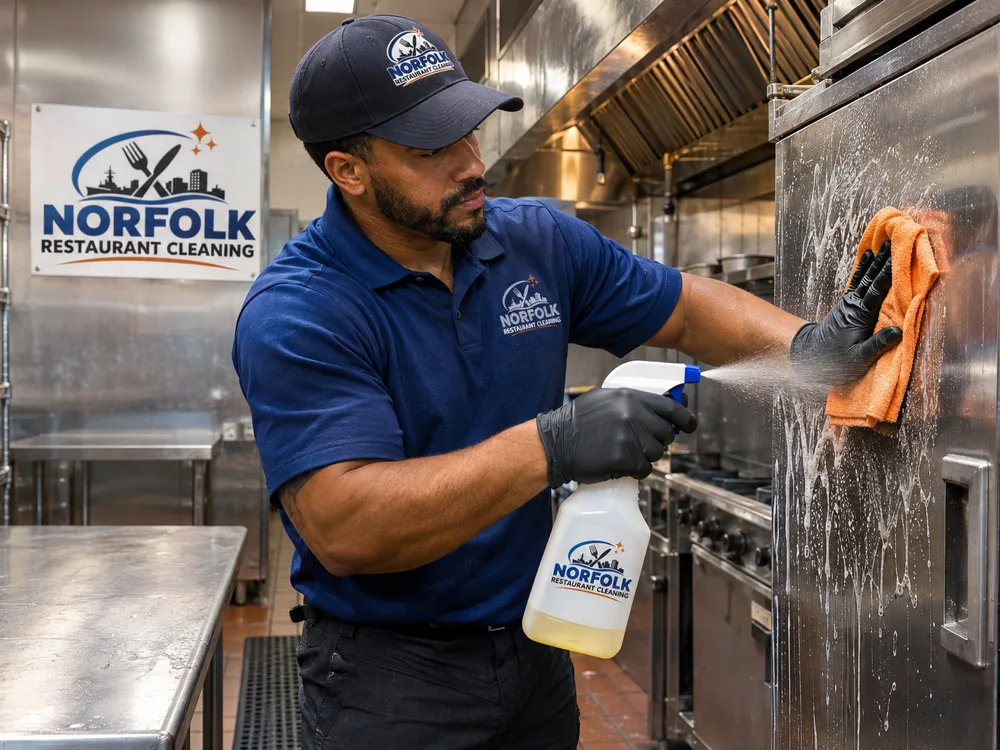
Accessible fronts, sides, control surrounds, legs, casters, and the floor edges around equipment can collect cooked-on grease and food debris.
Serving Norfolk, Virginia & surrounding areas
Mon–Fri 8am–6pm · Sat 9am–2pm
Kitchen cleaning in Chesapeake, Virginia
Detailed cleaning removes cooked-on grease, food residue, and overhead dust from the areas your regular closing routine may not reach.
Built around your operation
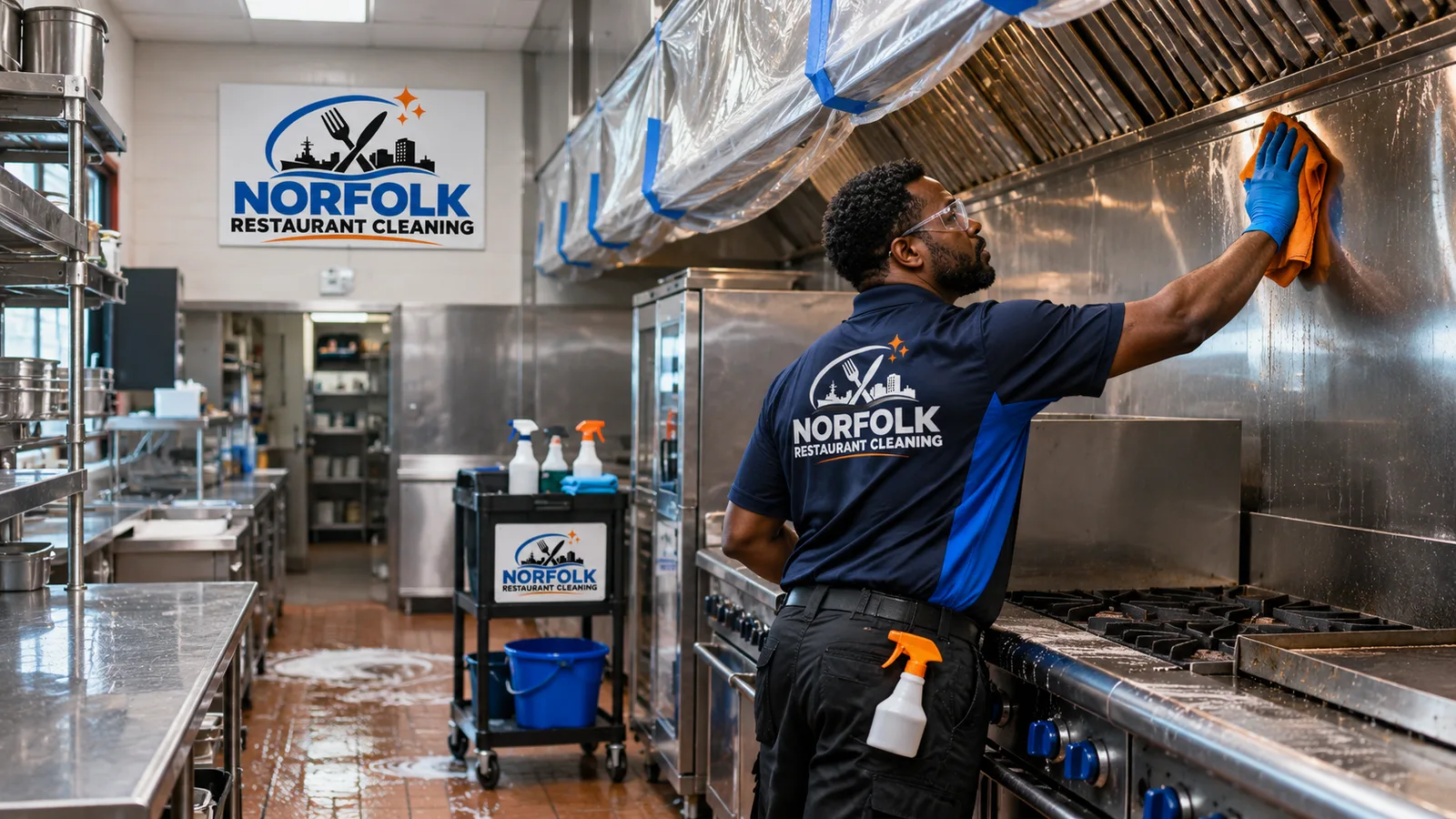
Restaurant Kitchen Cleaning Chesapeake businesses can schedule for periodic deep cleaning should address more than visible countertops. Grease aerosols settle on equipment, walls, pipes, conduit, ceiling vents, and other elevated surfaces. Dust then clings to that film, creating buildup that routine wiping and floor care may leave behind.
Norfolk Restaurant Cleaning provides planned kitchen cleaning for restaurants and other commercial food operations in Chesapeake. Our restaurant specialists serving Norfolk and nearby Hampton Roads communities develop the work around each kitchen's layout, operating hours, surface materials, and current condition. A written scope can separate recurring cleaning from periodic detail work so managers know which surfaces are included.
Chesapeake kitchens also deal with the practical effects of the region's humid coastal climate. Moist air can slow drying in enclosed areas, so airflow, product dwell time, and final rinsing require attention. Busy commercial areas near Greenbrier often need scheduling that works around steady customer traffic, while independent operations in Great Bridge may prefer concentrated work after closing. In Western Branch, convenient access to major routes can support early or overnight service windows without disrupting meal periods.
Defined kitchen scope
A detailed scope may include degreasing washable walls, cleaning equipment exteriors, wiping stainless steel work surfaces, removing residue around casters and legs, cleaning baseboards, and detailing accessible pipes or utility lines. Floors can receive edge work and attention beneath movable equipment where crumbs, grease, and wash water collect.
Cleaning methods should match the surface. Stainless steel is cleaned with nonabrasive tools and wiped with its grain to reduce scratching. Painted walls, ceiling tiles, plastics, and coated metal may require milder chemistry or limited moisture. Grease-cutting detergents need enough dwell time to loosen soil, but they must not be allowed to dry on the surface. Food-contact areas require the proper wash, rinse, and sanitizing steps for the product and surface involved.
Kitchen cleaning is separate from exhaust-system service. Grease removal inside hood plenums, fans, and ductwork is specialized work and should not be confused with wiping accessible exterior hood surfaces. The proposed scope should make that boundary clear before service begins.
Detailed service zones
Accessible fronts, sides, control surrounds, legs, casters, and the floor edges around equipment can collect cooked-on grease and food debris.
Washable wall panels and tile near prep and cooking areas are treated according to the finish, soil level, and proximity to food-contact surfaces.
Edges, corners, baseboards, and accessible areas beneath movable equipment receive detail work beyond routine mopping.
Empty, accessible shelving and nonporous work surfaces can be cleaned after ingredients, utensils, and loose supplies are secured.
Exposed pipes, conduit, vents, beams, and other reachable high surfaces can be dusted or degreased when included in the written scope.
Push plates, handles, kick plates, and door frames are cleaned to remove fingerprints, grease film, and handling residue.
Controlled overhead cleaning
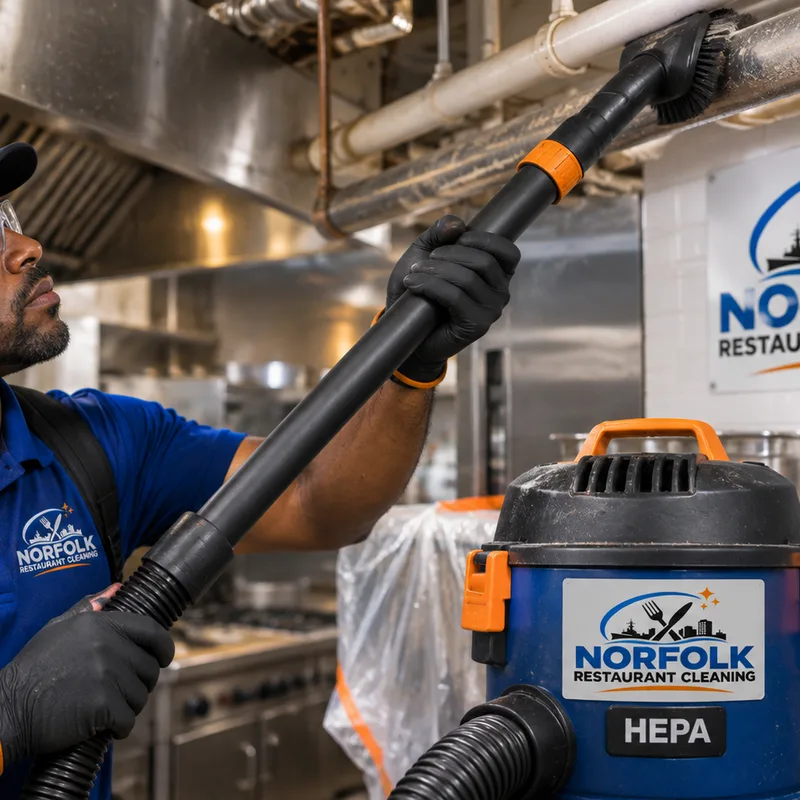
Restaurant High Dusting Chesapeake kitchens need is controlled overhead cleaning of accessible pipes, vents, beams, light housings, ledges, and similar surfaces. These areas can hold dry dust, grease-bound soil, and lint that ordinary nightly cleaning does not reach. The method depends on whether the buildup is loose or bonded to a greasy film.
Before overhead work begins, exposed food, clean utensils, small equipment, and prep surfaces should be removed or securely covered. HEPA-filtered vacuuming and damp wiping help control loose debris. Greasy deposits may require a compatible degreaser applied to the cleaning tool rather than sprayed freely near electrical components or open equipment. Technicians should work from high surfaces toward lower ones so dislodged residue is captured during the remaining cleaning steps.
Access is assessed in advance. Extension tools may handle some surfaces, while stable commercial ladders or other suitable access equipment may be needed for higher areas. Fragile ceiling tiles, unprotected electrical fixtures, active fire-suppression components, and inaccessible spaces require limits or coordination rather than aggressive cleaning.
From priorities to review
Step 1 of 5
We discuss operating hours, problem areas, recent cleaning history, access restrictions, and the surfaces that need attention. Photos or an on-site review can help define heavier grease conditions.
Step 2 of 5
The plan identifies included equipment exteriors, overhead areas, walls, floors, and exclusions. It also establishes who will move food, utensils, and any equipment that requires utility disconnection.
Step 3 of 5
Loose items are cleared or covered, sensitive components are identified, and cleaning tools are staged to reduce cross-contamination. Work generally proceeds from cleaner areas toward heavier soil and from high surfaces toward the floor.
Step 4 of 5
Technicians use surface-appropriate chemistry, mechanical agitation, rinsing, and controlled moisture. Tools used near floors or heavy grease are kept separate from those used on prep surfaces.
Step 5 of 5
Accessible surfaces are checked for remaining residue, standing water, and cleaning-product film. Any inaccessible area, damaged finish, or maintenance concern observed during the work can be documented for management.
Scheduling across Chesapeake
The right frequency depends on cooking volume, menu, equipment arrangement, ventilation performance, and how much detail the in-house crew completes each shift. Frying and charbroiling can create more airborne grease than light prep. Open ceilings and exposed utilities provide more horizontal surfaces where dust can settle. Tight equipment spacing can also make routine access difficult.
A one-time deep cleaning may suit a kitchen preparing for an inspection, management change, equipment service, or a reset of neglected areas. Recurring service is useful when overhead buildup and hard-to-reach grease return faster than staff can address them. The interval should be based on observed conditions rather than a generic calendar.
Scheduling matters across Chesapeake's spread-out commercial areas. Restaurants around Greenbrier's shopping and dining corridors may need work after late closing hours. Great Bridge operations may choose a quieter weekday window, while kitchens near the Western Branch and South Norfolk areas can have different delivery and access constraints. We confirm entry, parking, alarm procedures, water access, and the time the kitchen must be ready for staff before work is scheduled.
Tell us which areas are causing concern, when the kitchen is available, and whether you need a one-time reset or a recurring cleaning plan. We will help define a practical scope before work begins.
Common questions
Pricing is based on labor, kitchen size, soil level, access, and the exact surfaces included rather than a single standard rate. Heavy grease, crowded equipment lines, overnight scheduling, and high dusting that requires special access can increase the work involved. An on-site review or clear photos allow Norfolk Restaurant Cleaning to prepare a written scope and confirm the price before service.
Yes, restaurant kitchen cleaning can often be scheduled after closing when access and building procedures permit. The plan should account for staff departure, alarm codes, locked service entrances, nearby residences, and the time surfaces need to dry before morning prep. Chesapeake restaurants with late meal periods should allow enough time for clearing food and cooling equipment before cleaning starts.
The timeline depends on the kitchen's size, grease level, equipment access, and whether overhead cleaning is included. A focused cleaning may fit within one closed shift, while a larger or heavily soiled kitchen may need a longer window or work divided into zones. The expected duration is set after the scope and access conditions are reviewed.
Food, clean utensils, small appliances, and loose supplies should be removed or securely protected before cleaning begins. Restaurant staff should handle any equipment that requires gas, electrical, plumbing, or fire-suppression disconnection unless a qualified trade has been arranged. The preparation plan identifies what management must clear and what the cleaning crew can safely move.
High dusting is performed only after exposed food and sensitive work areas are protected, and the method is adjusted around electrical components and fragile finishes. HEPA-filtered vacuuming or controlled damp wiping can limit falling dust. Active fire-suppression parts, damaged ceiling materials, and unsafe access points are not disturbed without proper coordination.
Routine kitchen cleaning may include accessible exterior hood surfaces when they are listed in the scope, but it does not automatically include internal exhaust cleaning. Hood plenums, ducts, and rooftop fans require specialized procedures and access. Restaurant managers should confirm which exterior surfaces are included and arrange qualified exhaust-system service separately when required.
Yes, recurring work can be planned around the kitchen's production level, closing routine, and rate of grease or overhead buildup. The first detailed cleaning provides a useful baseline. Later visits can focus on the surfaces that accumulate soil fastest while keeping less affected areas on a longer rotation.
Discuss your kitchen scope
Describe the kitchen, the buildup you are seeing, and your available service window. Norfolk Restaurant Cleaning will help define the surfaces, preparation, and scheduling needed for a clear written scope.
Talk with our local crew
Tell us about your restaurant, operating hours, and priority areas so we can help define a practical cleaning scope.
REQUEST A QUOTE
After you submit the form, our team will review your details and contact you to discuss the space, schedule, and next steps.