Commercial Kitchens
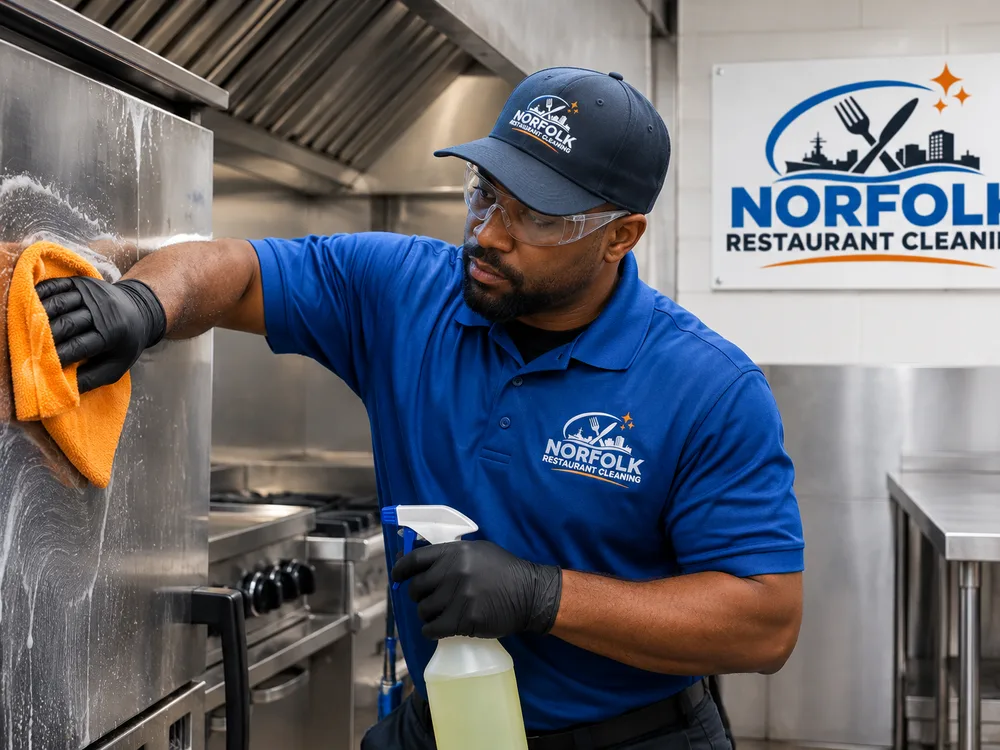
Degreasing, floor scrubbing, equipment-exterior cleaning, splash-zone attention, baseboard detailing, and cleaning beneath accessible movable items can be assigned by shift or service frequency.
Serving Norfolk, Virginia & surrounding areas
Mon–Fri 8am–6pm · Sat 9am–2pm
Restaurant cleaning in Hampton, Virginia
Dependable cleaning plans for commercial kitchens, dining rooms, restrooms, floors, and the high-touch areas your staff and guests use every day.
Built around your operation
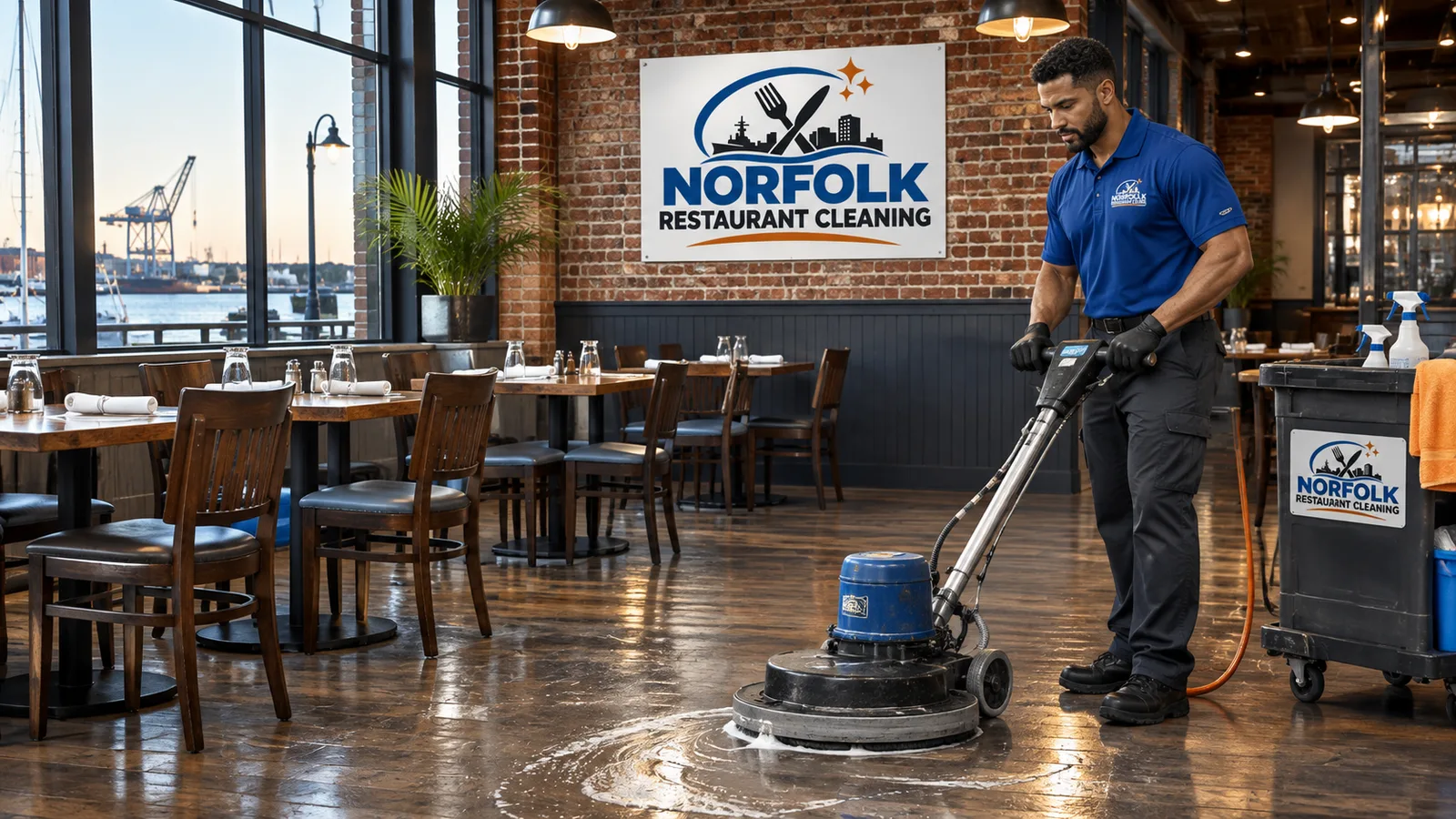
Restaurant Cleaning Hampton should support the way your restaurant operates, rather than force the same checklist onto every property. A quick-service kitchen has different soil loads and traffic patterns than a full-service dining room, bar, café, or catering facility. Norfolk Restaurant Cleaning develops the scope around your layout, operating hours, surfaces, and areas that need the most attention.
Our work can cover recurring front-of-house and back-of-house cleaning, periodic detail work, or a combination of both. Norfolk's restaurant specialists coordinate tasks carefully with managers so cleaners know which areas are included, when access is available, and what must be ready before the next shift. The written scope can identify task frequency, approved products, exclusions, and quality-control expectations.
Hampton restaurants also contend with humid coastal conditions and wet weather that can bring moisture and tracked soil through guest entrances. Properties near the Coliseum Central commercial district may need cleaning timed around events and changing customer volume. Downtown Hampton restaurants can have compact service areas or restricted access, while Phoebus businesses may need a plan suited to smaller dining rooms and mixed-use buildings. These operating details affect staffing, equipment, and scheduling, so they should be addressed before service begins.
Front and back of house
A complete restaurant cleaning scope separates front-of-house tasks from kitchen work because the surfaces, soils, tools, and chemicals are different. Dining-room service may include wiping tables and seating, dusting accessible surfaces, cleaning glass, vacuuming carpet, damp mopping hard floors, and disinfecting high-touch points. Entry doors, host stations, railings, and payment-area surfaces can be assigned their own frequencies.
Kitchen cleaning focuses on food residue, grease, splash zones, and floor safety. Typical tasks include degreasing washable surfaces, cleaning equipment exteriors, scrubbing floors, detailing baseboards, and cleaning beneath movable equipment when access is provided. Food-contact surfaces require products and procedures appropriate for those surfaces. Cleaning removes soil first; sanitizing follows at the product label's concentration and contact time.
Restroom work commonly includes cleaning and disinfecting fixtures, servicing dispensers when supplies are provided, wiping partitions, cleaning mirrors, and mopping floors. Periodic work can address floor edges, grout lines, wall splatter, vents, and other details that daily routines may not cover. Exterior pressure washing, pest control, grease-trap pumping, exhaust-hood system cleaning, and fire-suppression work are separate specialties and should not be assumed to be part of a routine janitorial scope.
Zone-specific service
Degreasing, floor scrubbing, equipment-exterior cleaning, splash-zone attention, baseboard detailing, and cleaning beneath accessible movable items can be assigned by shift or service frequency.
Tables, seating, floors, glass, ledges, host stations, and high-touch points receive attention based on traffic and the material being cleaned.
Fixtures, partitions, dispensers, mirrors, touchpoints, and floors are cleaned with dedicated tools to reduce the risk of cross-contamination between work zones.
Accessible exterior surfaces, floors, kick plates, shelving, and splash areas can be included after staff remove food, glassware, and bar tools.
The method is matched to the surface. Options may include vacuuming, damp mopping, machine scrubbing, grout attention, and scheduled refinishing where suitable.
A planned rotation can cover floor edges, low walls, chair legs, vents, reachable overhead surfaces, and buildup behind or beneath movable furnishings.
From walkthrough to review
Step 1 of 5
We review the kitchen, dining room, restrooms, storage access, flooring, entrances, and any areas with recurring buildup. Managers can identify shift-change limits, alarm procedures, and surfaces that require approved products.
Step 2 of 5
Each task is assigned a frequency, such as every service visit, weekly, or periodic. The scope also records exclusions and clarifies who moves equipment, removes waste, secures food, and provides consumable supplies.
Step 3 of 5
Cleaning can be planned around closing, opening, delivery windows, or low-traffic periods. Locations affected by Hampton Coliseum or Hampton Roads Convention Center events may benefit from adjustable staffing or extra floor attention after heavy guest traffic.
Step 4 of 5
Color-coded or otherwise separated cloths and tools help keep restroom equipment away from food-service areas. Crews follow product labels for dilution, dwell time, surface compatibility, and required personal protective equipment.
Step 5 of 5
Completed work is checked against the agreed scope. If traffic patterns, menus, hours, or seasonal demand change, the task schedule can be revised instead of leaving recurring trouble spots untreated.
Specific, documented standards
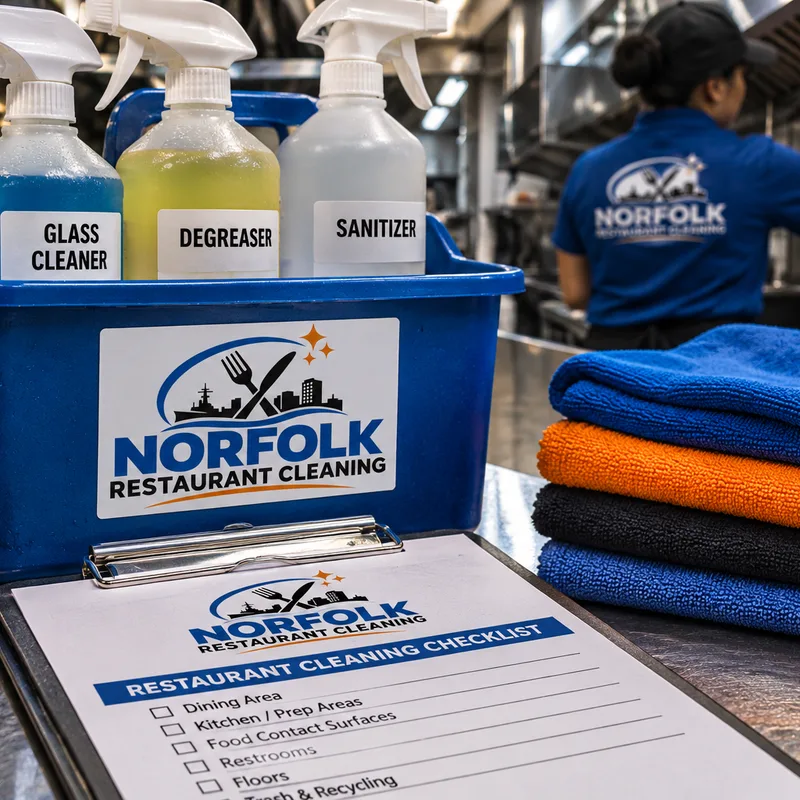
Reliable cleaning is easier to manage when expectations are specific. A useful checklist names the surface and the action, rather than relying on broad phrases such as “clean kitchen.” It may require floors to be degreased and machine scrubbed, stainless steel exteriors to be wiped without abrasive damage, and restroom fixtures to be cleaned and disinfected with dedicated tools.
Chemical choice matters as much as technique. Degreasers must be compatible with the surface, and disinfectants need to remain visibly wet for the contact time stated on the label. Quaternary ammonium products, chlorine-based sanitizers, and other commercial chemicals have different uses and dilution requirements. Products should never be mixed, and staff should have access to Safety Data Sheets for chemicals used at the property.
The Virginia Department of Health regulates food establishments through local health districts, but a cleaning company does not replace management's food-safety program or required employee practices. Restaurant managers remain responsible for operational controls such as food storage, warewashing, temperature control, and employee hygiene. A well-defined cleaning plan supports those responsibilities by keeping assigned areas and surfaces on a consistent schedule.
General planning ranges
Recurring restaurant cleaning in Hampton typically costs about $0.10 to $0.30 per square foot per visit, while a detailed kitchen deep clean may run roughly $500 to $2,500 or more. These are general planning ranges, not fixed quotes. Price changes with square footage, grease buildup, cleaning frequency, floor type, restroom count, equipment access, after-hours requirements, and whether periodic machine scrubbing is included. A walkthrough and written scope confirm the exact cost before service starts.
Request a CallbackGet a cleaning plan based on your restaurant's actual layout, hours, surfaces, and workload, with the tasks and service frequency stated clearly before work begins.
Common questions
Yes, service can often be scheduled after closing or before opening, subject to crew availability and building access. The plan should account for alarms, locked areas, staff finishing times, and the hours needed for floors to dry safely. Restaurants near Coliseum Central may also want timing that can adapt to event-driven traffic.
The right frequency depends on customer volume, menu, hours, flooring, and the amount of cleaning completed by restaurant staff. Busy kitchens and restrooms may need service after each operating day, while vents, floor edges, grout, and other detail work can follow a weekly or periodic rotation. A walkthrough determines which tasks belong at each frequency.
Routine janitorial cleaning generally does not include internal exhaust-hood systems, rooftop fans, ducts, fire-suppression components, or grease-trap pumping. Those jobs require specialized contractors, equipment, and documentation. Accessible hood exteriors may be included if that task is expressly written into the scope.
Cross-contamination is controlled by separating tools and procedures for kitchens, dining areas, and restrooms. Cleaners can use color-coded cloths, dedicated restroom equipment, fresh cleaning solution, and a planned work order. Food and utensils should be covered or removed before chemicals are applied nearby.
Restaurant staff should remove or secure food, utensils, and movable countertop items before cleaning begins. Heavy equipment is moved only when the written scope assigns responsibility and it can be moved safely without disconnecting utilities. The initial walkthrough identifies fixed equipment, casters, tight clearances, and inaccessible areas.
Yes, common restaurant flooring can be cleaned when the method and chemistry match the material and its condition. Tile and grout may need agitation, luxury vinyl tile requires compatible products, finished floors need controlled pH, and carpet benefits from commercial vacuuming plus scheduled extraction. The floor is inspected before a method is assigned.
Yes, task frequency and staffing can be adjusted when operating hours or guest volume changes. This can be useful for restaurants affected by events at Hampton Coliseum or the Hampton Roads Convention Center. Advance notice helps coordinate extra floor care, restroom attention, or post-event cleaning.
Plan your Hampton service
Describe your operating hours, problem areas, and preferred service frequency. Norfolk Restaurant Cleaning will review the property and prepare a customized scope for the kitchen, guest areas, floors, and restrooms.
Talk with our local crew
Tell us about your restaurant, operating hours, and priority areas so we can help define a practical cleaning scope.
REQUEST A QUOTE
After you submit the form, our team will review your details and contact you to discuss the space, schedule, and next steps.