Commercial Kitchen Cleaning
Degreasing and detailed cleaning for cooking-line surroundings, prep areas, sinks, washable walls, floors, doors, and other agreed back-of-house surfaces.
Serving Norfolk, Virginia & surrounding areas
Mon–Fri 8am–6pm · Sat 9am–2pm
Restaurant cleaning in Virginia Beach
Dependable cleaning plans for commercial kitchens, dining rooms, service areas, and food-service equipment, scheduled around your operating hours.
Built around daily service
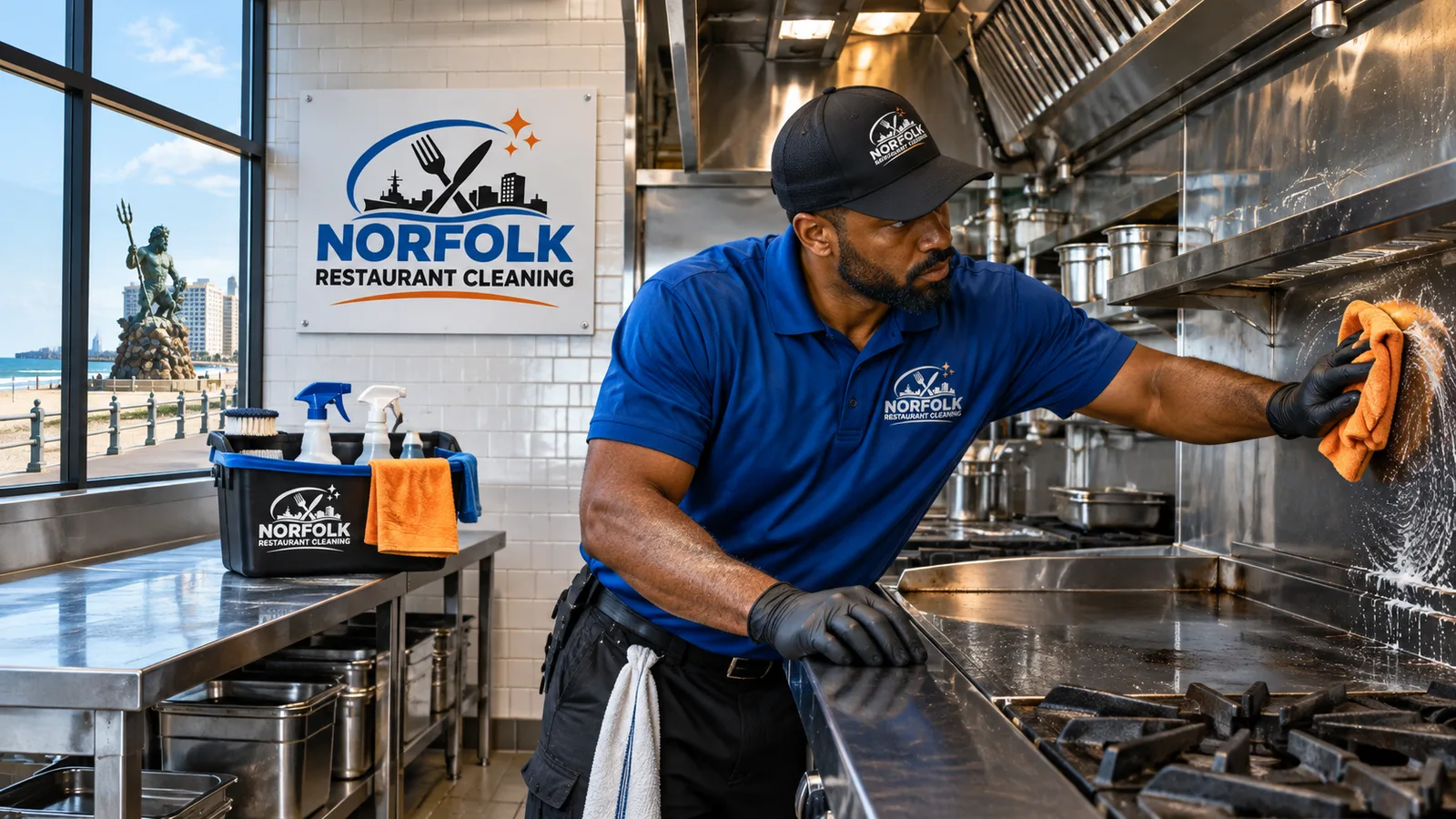
Restaurant Cleaning Virginia Beach businesses rely on should address the places that affect daily operations: greasy cooking lines, food-contact areas, floors, restrooms, dining rooms, and equipment exteriors. Norfolk Restaurant Cleaning builds the scope around your restaurant's layout, hours, soil levels, and existing staff duties rather than applying the same checklist to every property.
Our team works as a professional restaurant company in Norfolk serving nearby Virginia Beach food-service operations. The business is based on Lyons Avenue in Norfolk, which supports practical scheduling across the South Hampton Roads area. We can plan work for independent restaurants, multi-unit operators, cafés, bars, and other commercial food facilities without interrupting the busiest parts of the day.
Virginia Beach restaurants face different operating conditions depending on location. Oceanfront dining rooms may need close attention to tracked-in sand, glass doors, and high-use guest areas. Town Center restaurants often balance cleaning with mixed-use property access and shared loading arrangements. Shore Drive establishments may have sharp seasonal changes in traffic, while neighborhood restaurants in Kempsville and Great Neck often need steady recurring service built around regular local trade. These details affect timing, crew access, and cleaning frequency.
Defined cleaning methods
A complete restaurant cleaning plan separates cleaning, degreasing, and sanitizing because they are different tasks. Cleaning removes food residue and loose soil. Degreasing breaks down oily buildup on suitable surfaces. Sanitizing follows cleaning on designated food-contact surfaces, using the correct product concentration and contact time for that product.
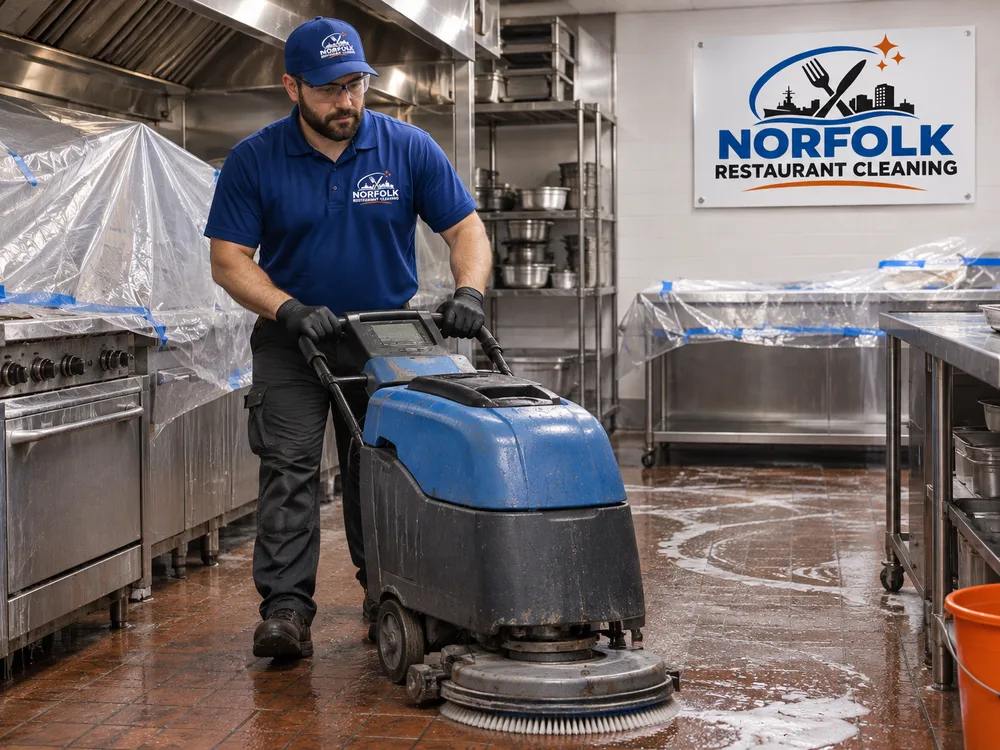
Back-of-house work may cover floors, baseboards, walls near the cooking line, stainless steel exteriors, prep tables, sinks, shelving, doors, handles, and reachable surfaces beneath movable equipment. Front-of-house work can include dining floors, tables, chairs, booths, counters, entry glass, touchpoints, and restrooms. The written scope should state which areas are included, how often they are cleaned, and which tasks remain with restaurant staff.
We also account for material differences. Stainless steel, quarry tile, sealed concrete, rubber flooring, glass, and painted surfaces do not all tolerate the same chemistry or agitation. Product labels, equipment manufacturer instructions, and the restaurant's safety procedures guide the method.
A complete restaurant scope
Degreasing and detailed cleaning for cooking-line surroundings, prep areas, sinks, washable walls, floors, doors, and other agreed back-of-house surfaces.
Routine care for floors, tables, seating, counters, entry glass, and high-touch points, with timing planned around opening, closing, and table service.
Cleaning and disinfection of fixtures, partitions, floors, handles, and touchpoints, plus attention to break rooms or changing areas when included in the scope.
Exterior cleaning and accessible detailing for approved equipment, using methods suited to stainless steel and other manufacturer-specified finishes.
Scheduled attention to accumulated residue along edges, beneath movable items, around equipment legs, on baseboards, and in other areas that routine shifts may miss.
Recurring service can be arranged during agreed access windows so cleaned areas are ready for the next shift without obstructing guests or kitchen production.
Careful equipment detailing
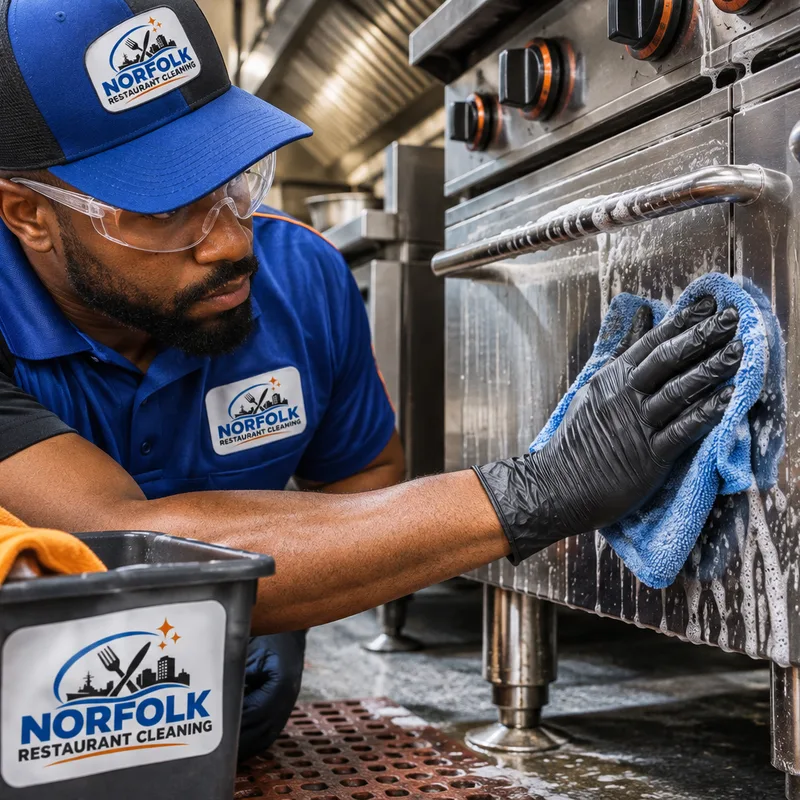
Restaurant Equipment Cleaning Virginia Beach kitchens need begins with identifying what can be cleaned safely without disassembly or technical service. Common tasks include removing grease and residue from equipment exteriors, control-area surrounds, handles, legs, casters, splash zones, and accessible surfaces beneath or behind movable units. Sensitive controls, electrical components, gas connections, and hot surfaces require clear restrictions.
Cold equipment needs special care. Refrigerator and freezer doors, gaskets, handles, exterior panels, and accessible interior surfaces can be included when the unit's contents, temperature controls, and food-safety procedures allow it. Cooking equipment must be cool and placed in a safe condition before cleaning begins. Staff and cleaners should agree on shutdown responsibilities before the appointment.
Commercial cleaning is separate from appliance repair, exhaust-system service, fire-suppression work, and licensed trade work. A clear scope prevents cleaners from disturbing fixed utility connections, internal components, or manufacturer seals. If equipment must be moved, the plan should identify who is authorized to move it and how the surrounding floor will be protected.
From review to adjustment
Step 1 of 5
We discuss the restaurant type, hours, access, kitchen layout, guest areas, equipment, current cleaning duties, and problem areas. Photos or an on-site walkthrough may be used to define the work.
Step 2 of 5
The proposed scope identifies included surfaces, exclusions, service frequency, access needs, and any preparation required from restaurant staff. This gives managers a clear basis for reviewing the service.
Step 3 of 5
Cleaning is planned for an agreed window, such as after closing, before opening, or during a low-activity period. Oceanfront seasonality, shared property access, and delivery schedules can be considered when setting the timing.
Step 4 of 5
The crew follows site access and safety instructions, places appropriate caution signs, protects nearby items, and uses methods selected for the surface and soil. Food and utensils should be stored or removed according to the agreed preparation plan.
Step 5 of 5
Completed areas are checked against the scope. Managers can report operational concerns or changing priorities so future visits address the restaurant's actual use patterns.
Match service to demand
Recurring cleaning is usually the better fit when a restaurant needs dependable support for floors, restrooms, dining rooms, touchpoints, or routine kitchen surfaces. Frequency depends on traffic, cooking volume, menu, flooring, staffing, and which duties are already completed each shift. Some locations need several visits within a week, while others need weekly or less frequent support.
A focused deep clean targets defined buildup or neglected areas rather than replacing everyday sanitation. It may be appropriate before a reopening, after equipment has been moved, during a menu or kitchen change, or when routine work cannot reach edges and concealed areas. The exact preparation should be agreed in advance, especially if the job involves cold storage, equipment shutdown, or restricted-access spaces.
Virginia Beach's humid coastal climate can contribute to moisture being tracked through entrances, while summer visitor traffic can increase sand and soil in Oceanfront dining areas. The practical response is to adjust mat care, floor attention, and service frequency rather than rely on a fixed schedule throughout the year.
Clear pricing inputs
Restaurant cleaning is generally priced after the provider reviews the facility and scope because square footage alone does not describe the labor involved. A compact kitchen with heavy grease accumulation may require more time than a larger dining room receiving routine floor care.
The main cost drivers are cleaning frequency, kitchen condition, number of restrooms, floor type, equipment access, required service window, and whether the work is routine or restorative. Tasks that require equipment shutdown, moving approved items, hand detailing, or repeated degreasing add labor. Parking, loading access, keys, alarms, and building access can also affect scheduling.
A useful proposal should identify included tasks and exclusions instead of relying on broad terms such as “deep cleaning.” It should also state the proposed frequency and any responsibilities assigned to restaurant staff. The exact price is confirmed after the scope and site conditions are reviewed.
Get a written cleaning scope that matches your kitchen, equipment, guest areas, operating hours, and access requirements before service begins.
Common questions
The right frequency depends on cooking volume, guest traffic, surface types, and the cleaning already completed by restaurant staff. High-use floors, restrooms, and touchpoints may need frequent service, while equipment detailing and edge work can follow a separate rotation. Oceanfront restaurants may also adjust floor and entry care when seasonal traffic brings more sand indoors.
Yes, service can often be arranged during an agreed after-hours or pre-opening access window. The plan should cover keys or entry procedures, alarms, parking, shutdown responsibilities, and the time when floors and equipment must be ready for staff. Restaurants in mixed-use areas such as Town Center may also need to coordinate building access rules.
Staff should secure food, remove utensils and small wares from the work area, identify restricted equipment, and complete any agreed shutdown steps. Hot equipment must have enough time to cool, and only authorized people should move units connected to gas, water, or electricity. The preparation list should be settled when the scope is approved.
No, routine equipment cleaning does not include appliance repair, internal mechanical work, fixed utility disconnection, fire-suppression service, or specialized exhaust-system work unless separately stated and performed by a qualified provider. Cleaning normally focuses on agreed exterior and safely accessible surfaces while following equipment instructions.
Yes, both areas can be included when the schedule and scope allow enough time for each space. Kitchen degreasing, dining-room floor care, entry glass, seating, restrooms, and touchpoints can be assigned separate tasks within the same visit. The proposal should make clear which areas receive routine care and which receive periodic detailing.
A visit may take several hours, but the actual duration depends on facility size, buildup, equipment access, floor condition, and the number of cleaners assigned. A first deep clean often takes longer than later recurring visits because accumulated grease and edge soil may require repeated treatment. Timing is confirmed after a walkthrough or detailed scope review.
No, products and methods should be selected for the soil and the surface. Stainless steel, quarry tile, sealed concrete, glass, and rubber flooring can require different chemistry and tools. Food-contact areas also require the correct cleaning and sanitizing sequence, including the labeled concentration and contact time of the selected sanitizer.
Discuss your restaurant scope
Tell Norfolk Restaurant Cleaning about your kitchen, dining areas, equipment, current cleaning routine, and preferred access window. We will help define a practical scope for your Virginia Beach operation.
Talk with our local crew
Tell us about your restaurant, operating hours, and priority areas so we can help define a practical cleaning scope.
REQUEST A QUOTE
After you submit the form, our team will review your details and contact you to discuss the space, schedule, and next steps.