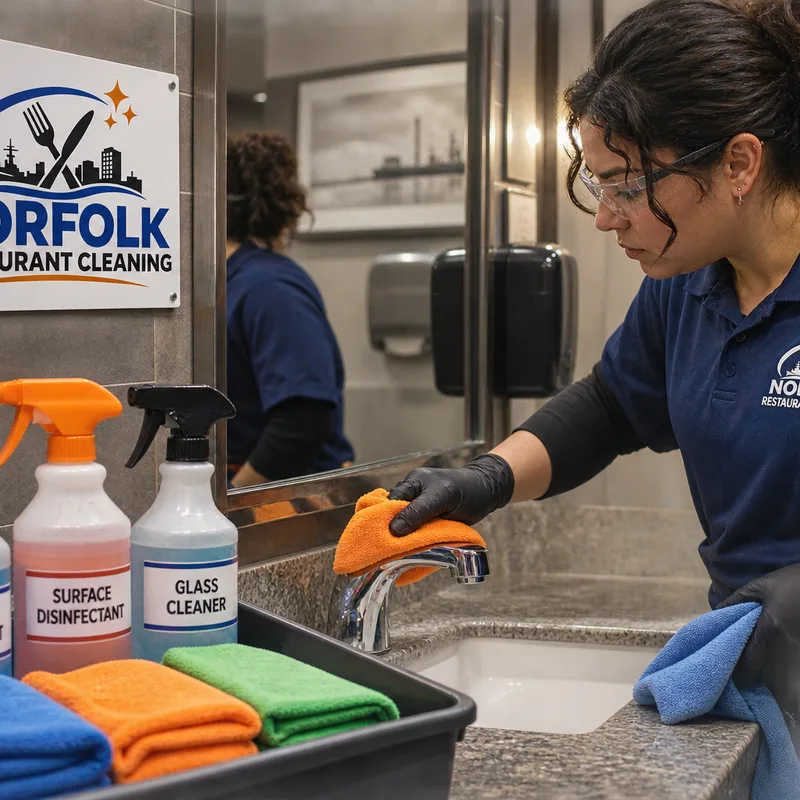
Restaurant Bathroom Cleaning Portsmouth businesses rely on should follow a repeatable sequence. The cleaner first posts any required closure notice, removes waste, and applies products to the appropriate surfaces. Toilets and urinals are cleaned with dedicated tools. Sinks, faucets, counters, dispensers, mirrors, partitions, handles, and other touchpoints are addressed before the floor is cleaned last. Each product must remain wet for its label-stated contact time to disinfect effectively.
Appearance matters, but odor control depends on removing the source rather than covering it with fragrance. Soil can collect around fixture bases, beneath partitions, along grout lines, and near floor drains. Persistent odor may also indicate a plumbing or maintenance issue that cleaning alone cannot correct. The crew should report leaks, loose dispensers, damaged caulk, or recurring drain concerns so management can arrange repairs.
Restroom tools should remain separate from kitchen and dining-room supplies. Color coding, labeled containers, clean mop water, and a defined route through the facility reduce the chance of carrying restroom soil into guest or food-service areas. A checklist can also include soap, tissue, and towel levels when the restaurant provides those consumables.